Posts

Advantages Of Semiconductor Optical Amplifiers

Image
Introduced in the 1990s, the optical amplifier gave new dimensions to the regenerator technology and opened new opportunities to the WDM (Wavelength Division Multiplexing) technology as well. Mainly, it is used for directly amplifying an optical signal without having to convert it into an electrical signal. As you may already know, there are several kinds of optical amplifiers including erbium-doped-fiber amplifiers (EDFAs), Raman amplifiers, and the popular semiconductor optical amplifiers (SOAs). Semiconductor optical amplifiers make use of a semiconductor as a gain medium. These are specially designed to increase the optical launch power in order to compensate for the loss of optical devices in general applications. SOAs are frequently used in telecommunication systems as fibre-pigtailed components that are capable of generating gains of a maximum of 30 dB and usually operate at signal wavelengths ranging from 0.85 µm to 1.6 µm. Advantages of SOAs: 1. Semiconductor optical amplifi...

Comparison of SLD, LD, and LED

Image
Superluminescent diodes reduce coherence noise and enable the user to acquire high-precision measurement. So it is used in sensing fields, including photo-application measurement and medical images. Whereas, LEDs are usually considered light sources because they emit light waves without any liquid medium. Further, LDs are essentially laser diodes thus acting as point light sources. Here are some of the key differences between Superluminescent Diodes, Light emitting diodes, and laser diodes: 1. Emitting State: LD: Laser diodes have 2 reflecting coatings in which one of them prevails over the other to maintain the signal. Thus, the end facet reflectivity of one side is greater than the opposite. SLD: Superluminescent diodes have both ends facets with non-reflecting coating. Instead of reflection, the input gets absorbed. LED: While the other 2 maintained a unidirectional flow, LED arrangements are rather special, at an angle of 90 degrees. 2. Emitted Light: LD: LDs emit stimulated em...

Application Of Semiconductor Optical Amplifiers

Image
Since semiconductor optical amplifiers have special properties such as low power consumption, wavelength flexibility and nonlinearities, it is important in the development and optimization of electronic devices. It has major applications in optical reflections and related sectors, let us take a look at some of them: 1. Direct Signal Amplification: Signal amplification refers to increasing the strength of the signal. Long-distance signal transmission via optical arrangement is prone to power loss, due to constant optical reflection. Semiconductor optical amplifiers help to mitigate these losses and continue the signal by amplifying the signal strength. 2. External Modulation: SOA works as an efficient modulator. Modulating refers to the process of superimposing the amplitude, frequency, etc., parameters of the wave onto another wave. Thus external modulation is one of the primary applications of semiconductor optical amplifiers. 3. Optical Pulse Generation and Manipulation: Any impulse...

Definition And Working Of VCSEL

Image
Semiconductor lasers such as FP, DFB, VCSEL and more are essential devices for regulating and improving the Internet and communication sector in the world. Laser’s outstanding properties such as high efficiency of the electrical energy into photons, excellent reliability, small footprint, modulation bandwidth, and low cost have made it a principle component in various communication applications. Vertical Cavity Surface Emitting Laser is one such laser that is largely used in various industrial and military applications. Let's know what is VCSEL in detail. What is VCSEL? VCSEL   is the type of semiconductor laser diode with laser beam emission perpendicular from the top surface, as opposed to conventional edge-emitting semiconductor lasers which emit from surfaces. Compared to conventional edge-emitting light diodes, VCSEL emits light or a vertical beam from its top surface. Now let us comprehend how Vertical Cavity Surface Emitting Laser works. Note that, as it is challenging t...

Superluminescent Diodes For Optical Coherence Tomography

Image
It is not uncommon to see the use of superluminescent diodes for optical coherence tomography. Because of the unique properties of superluminescent diodes (SLD), such as low coherence light, high brightness, minimal spectral ripple, and a broad, smooth optical output spectrum, it is the preferred and perfect solution for optical coherence tomography. However, in order to comprehend why superluminescent diodes are used for optical coherence tomography, let's understand these things. Why Use Superluminescent Diodes For Optical Coherence Tomography? Let’s start with a quick overview of OCT. Optical coherence tomography is an imaging technique that captures micrometer-resolution, two- and three-dimensional images from within optical scattering media using low-coherence light. It’s used in medical imaging and non-destructive testing in the workplace. To put it another way, OCT is a new technology for high-resolution cross-sectional imaging. Superluminescent Diodes For Optical Coherence...

Introduction of LiDAR Drones

Image
 Light detection and ranging, or LiDAR laser , is a remote sensing technique that is increasingly being used in conjunction with drones. One can calculate the distance to the earth’s surface by using the speed of light, measuring the two-way travel time from the scanner’s laser beam, and creating a 3D point cloud. It is possible to distinguish real-life objects in LiDAR data because it is possible to determine which surface type the return came from based on the intensity of the return signal. This does closely match how much one would find in a picture. Let’s look at some exciting applications in which LiDAR-equipped drones are useful. But first, let’s discover what LiDAR drones are. What Is a LiDAR Drone? Any airborne drone with a LiDAR sensor attached is a LiDAR drone. The cost and size of LiDAR sensors have significantly decreased in recent years due to progress in the field of LiDAR technology, making it easier to mount a LiDAR payload on a drone.  Additionally, as LiDAR ...

The Architecture and Working of LiDAR Laser

Image
Assume you drove your car to a remote tourist destination last Christmas. Nonetheless, even though you were unfamiliar with the location or were visiting it for the first time, you made it safely. How did you do that? Well, the most probable answer could be that you used Google Maps along with the LiDAR laser technology installed in your car. Everyone who owns a car is familiar with the 3-D color map of your immediate surroundings that the car display monitor shows while you travel. This generates a map of the area around you and displays it to the driver, helping them in safe driving. But what is the name of this technology? It’s known as a LiDAR laser , which stands for Light Detection and Ranging. The Architecture of LiDAR Laser : A typical LiDAR laser consists of four major components. 1) transmitter (light source), 2) receiver (light detection), 3) signal detection system and 4) data acquisition and control system. Again, the LiDAR architecture can be built in two ways: biaxial or...

Comparisons of SLEDs, LDs And LEDs

Image
Superluminescent diodes , or SLEDs, are light-emitting diodes that emit light over a wider spectrum than traditional LEDs. While an LED typically emits light at a single wavelength, a SLED can emit light over a range of wavelengths. This makes them ideal for applications where a wide range of colors is desired, such as in fiber optic communications. SLEDs are also much brighter than LEDs, making them ideal for applications where high intensity light is needed. However, this comes at a trade-off as SLEDs have a shorter lifespan than LEDs. So, how do SLEDs differ from LDs and LEDs? Well, let's take a closer look. First, as we mentioned, SLEDs emit light over a much broader spectrum than LEDs. This is due to the fact that they use multiple semiconductor materials to create their light-emitting junction. By doing this, they are able to generate light at multiple wavelengths, rather than just a single wavelength like an LED. Second, SLEDs are much brighter than LEDs. This is because the...

Explained: How Broadband Light Sources Have Advanced Spectroscopy?

Image
Broadband light sources (BLSs) have become increasingly popular in the field of spectroscopy due to their many advantages. BLSs emit light over a wide range of wavelengths, making them ideal for applications requiring a wide spectral range. Additionally, It is very stable, meaning they can maintain a constant output over long periods of time. This stability is crucial for spectroscopy applications, where even small fluctuations in light output can affect results.  broadband light sources  have also made it possible to perform spectroscopy at very high speeds. Because the light from a BLS is so intense and focused, it can be used to quickly collect data from a sample. This is especially important for applications like medical diagnostics, where time is often of the essence. Overall, Broadband light sources have had a major impact on the field of spectroscopy, making it possible to collect more accurate data more quickly and easily than ever before. To learn about each of thes...

Overview of DFB Laser

Image
DFB lasers are semiconductor lasers that emit light in a very specific and well-defined wavelength range. They are used in a variety of applications, including telecommunications, data storage, and medical diagnostics. DFB lasers have several key advantages over other types of lasers. They are very stable and have a very low noise level. Additionally, they can be very easily modulated, making them ideal for use in high-speed data transmission applications. Despite these advantages, DFB lasers are not without their challenges. One of the biggest challenges is manufacturing them with a high degree of precision. This is because the wavelength of light emitted by a DFB laser is determined by the way the semiconductor material is intentionally defects. If you are considering using a DFB laser in your application, it is important to work with a qualified manufacturer who has experience in fabricating these devices. At Photonics Systems, we have over 25 years of experience in manufacturing s...

Explained: Broadband Light Sources for Optical Fiber Communication

Image
Broadband light sources are becoming increasingly popular for use in optical fiber communication systems. A broadband light source is a type of light source that emits light over a wide range of wavelengths. This makes them ideal for use in systems that require a large amount of data to be transmitted over a short period of time. There are a number of different types of broadband light sources available on the market today. The most common type is the LED, or light-emitting diode. LEDs are capable of emitting light over a wide range of wavelengths, making them ideal for use in optical fiber communication systems. There are a number of benefits to using broadband light sources in optical fiber communication systems. One of the biggest benefits is that they are capable of transmitting data at very high speeds. This is because the light emitted by a broadband light source is not limited to a single wavelength. Another benefit of using broadband light sources is that they are very efficie...

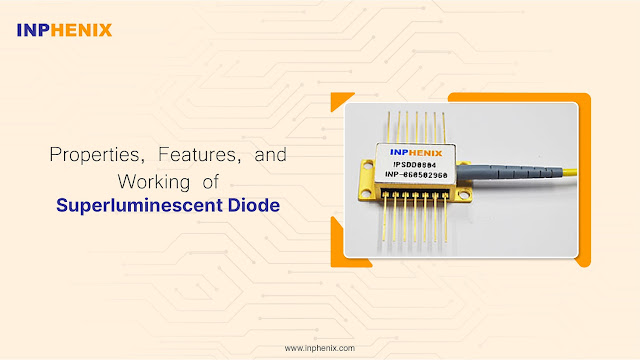
Superluminescent Diode: Properties, Features and Working

Image
A superluminescent diode (SLD) is a semiconductor light-emitting device that emits light over a wide range of wavelengths. They are typically used in optical fiber communication systems as broadband light sources.  SLDs are made of semiconductor materials such as gallium arsenide and aluminum gallium arsenide. The active region of an SLD typically contains one or more quantum wells. In operation, electrons and holes are injected into the quantum well where they recombine and emit light.  The wavelength of the light emitted by an SLD is determined by the size of the quantum well. SLDs can be fabricated to emit light over a wide range of wavelengths from the visible to the infrared. SLDs typically have a very broad emission spectrum with a full width at half maximum (FWHM) of 20-40 nm. This makes them ideal for use as broadband light sources in optical fiber communication systems.  Superluminescent diodes are also very efficient light sources. They have a quantum efficien...

Which is Better For Broadband Light Source? TD-OCT or SD-OCT?

Image
Optical coherence tomography (OCT) is a rapidly growing, advanced technology that has transformed ophthalmology practice. OCT is widely employed in the medical profession. It is based on low-coherence interferometry, and a focused probe may be utilized to acquire the reflectivity profile of material along an optical axis. There are two types of OCT imaging: TD-OCT and SD-OCT. Both have their own advantages and disadvantages, so which one is better for broadband light source imaging? TD-OCT uses a time-domain imaging method, which means that it captures light that is scattered at different depths in the tissue. This results in a more detailed image, but it also takes longer to capture. SD-OCT uses a spectral-domain imaging method,  it captures light that is scattered at different wavelengths. This results in a less detailed image, but it is much faster. So, which one is better? It depends on what you need. If you need a detailed image, then TD-OCT is the better choice. If you need a...

Definition And Features of O-band Amplifier

Image
Optical fiber communication has become an integral part of modern communication networks. Several transmission bands, from the original O-band amplifier to the U / XL band, are defined and standardized in fiber optic communication systems.  Optical amplifiers are also used at other places in a network, such as within an optical switching node to compensate for switch fabric losses. A Semiconductor O-band Amplifier is a laser diode (LD) with no feedback from its input and output ports and is also known as a Traveling-Wave Amplifier. Semiconductor Optical Amplifiers , or SOAs, have shown to be capable and multipurpose devices that serve as critical building blocks for optical networks. As a result, several functions have been achieved by adjusting the optical signal purely in the optical region. To see the features of O-band Amplifier, click here .

Definition And Characteristics of Gain Chip

Image
The new lasers open the way for the integration of optical and electrical components on gain chips, a breakthrough that might enhance computing speeds and data transmission rates considerably. Optical communications, spectroscopic methods, and frequency metrology have all been made possible by tunable lasers with small spectral linewidths. Gain chips are semiconductor optical devices used in external cavity laser diodes as the optical gain medium. It is used as a TLS (Tunable Light Source) with a wavelength selection filter. Due to the nature of the technology, the semiconductor laser source is an ideal contender, since it offers the advantages of size, weight, and power, as well as cost and production scale. To know the definition and types of gain chip, check our blog: Gain Chip: Definition, Characteristics & Applications .

Different Types of DFB Lasers

Image
The Distributed Feedback Laser, also known as the DFB laser diode, is a type of laser widely used for high-capacity long-distance transmission. Fiber-optic sensing, laser radar, fiber optical communication, barcode readers, disc reading, and laser scanning are just a few of the major applications of DFB lasers. What Is a DFB Laser? According to Wikipedia, a Distributed Feedback Laser is a type of laser diode in which the active region contains a periodically structured diffraction grating element. In layman’s terms, a DFB laser is a laser with a diffraction grating above the active region that acts as a Bragg reflector. Besides that, the distributed feedback laser is less susceptible to temperature variations and has a faster modulation speed. Also, in a distributed feedback (DFB) laser, the grating and reflection are often continuous along the cavity and not just at the ends of mirrors. This will eventually change the laser’s modal behavior and make it more stable. The key characteri...

Explained: How Does FP Laser Work?

Image
The Fabry Perot– FP laser , also known as the Fabry Perot Interferometer (FPI), is a type of laser that is widely used in the telecommunications industry, astronomy, and other fields. This laser’s primary application is for low-data-rate short-distance transmission over distances of up to 20 kilometers. It should be noted that the FP laser is a more advanced version or substitute for the DFB (Distributed Feedback) laser. The spectrum width is the fundamental distinction between DFB and Fabry Perot lasers. On the one hand, the Fabry Perot laser has a wide spectrum width and is a multi-longitudinal mode laser, whereas the DFB laser has a narrow spectrum width and is a single longitudinal mode laser. To know the working of FP laser, Check our blog .

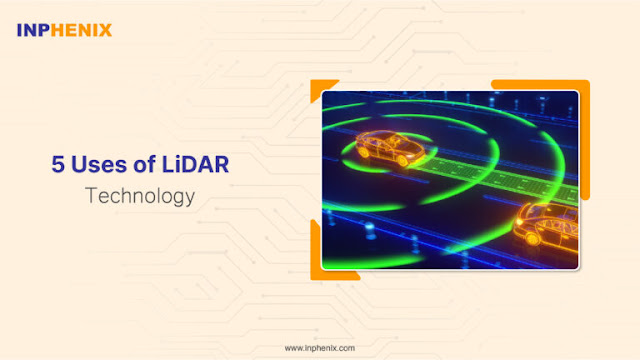
5 Amazing Uses of LiDAR laser

Image
Lidar laser is widely used for various aspects like Autonomous vehicles, mapping, Smartphones, and more. The main object behind this blog is to guide you about the uses of lidar technology.  LiDAR is the acronym for Light Detection And Ranging. Three main components that contribute to the collection and analysis of data- are scanning equipment, lasers, and GPS receivers. It provides various advantages such as Fast acquisition, less dependency on humans and weather, great canopy penetration, and more.  The Lidar laser is useful for creating a 3D representation of any survey and mapping the earth’s surface. Even it can be used to create high-resolution maps, Archaeology, building construction, Geography, Detect pollution, land survey, and many others. Let’s take a look at the major 5 uses of LiDAR Laser. 1. Smartphones Nowadays, many smartphones use lidar laser for camera focus and virtual-reality photos. Samsung, Apple, and others introduce the lidar sensor in their new models...

FP Laser vs DFB Laser: The Detailed Comparison

Image
In 1953, the Hungarian-American physicist John von Neumann has given the concept of the first semiconductor laser or laser diode and in 1957 the Japanese engineer Jun-ichi Nishizawa patented the world’s first semiconductor laser. But this laser diode is very power inefficient and practically useless. Since then research has been done across laser diodes for years and today we have lasers like DFB and FP Laser which give us efficient results with low power.  Check our blog Difference Between FP Laser and DFB Laser to learn about DFB and FP Laser with their structure and applications. Inphenix is a well-known name in the optical product manufacturing industry. We manufacture different types of lasers and diodes such as swept source laser, VCSEL, lidar laser, superluminescent diodes and semiconductor optical amplifiers.

Major Advantages of Lidar Laser

Image
In the last decade, there has been substantial growth in the application of LiDAR lasers. It has now become an important instrument that has use cases in all of these domains, ranging from agriculture to military equipment, autonomous vehicles, archaeology, cell phones, and more. The LiDAR laser (Light Detection and Ranging), which consists of three major components–the scanner, the laser, and the GPS receiver–can benefit a variety of industrial equipment. Unlike Radar, which uses radio waves as a medium for transmission and reception, LiDAR uses light rays. And also its give accurate surface measurement as well as 3D mapping. LiDAR laser that give it an advantage over traditional radar technology and make it a suitable laser for a wide range of applications. To see the top 5 advantages of LiDAR technology, check our blog: 5 Major Advantages of LiDAR Laser .