Posts

5 Amazing Uses of LiDAR laser
Image
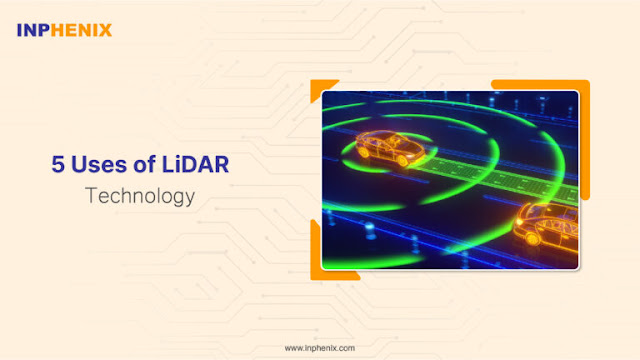
Lidar laser is widely used for various aspects like Autonomous vehicles, mapping, Smartphones, and more. The main object behind this blog is to guide you about the uses of lidar technology.  LiDAR is the acronym for Light Detection And Ranging. Three main components that contribute to the collection and analysis of data- are scanning equipment, lasers, and GPS receivers. It provides various advantages such as Fast acquisition, less dependency on humans and weather, great canopy penetration, and more.  The Lidar laser is useful for creating a 3D representation of any survey and mapping the earth’s surface. Even it can be used to create high-resolution maps, Archaeology, building construction, Geography, Detect pollution, land survey, and many others. Let’s take a look at the major 5 uses of LiDAR Laser. 1. Smartphones Nowadays, many smartphones use lidar laser for camera focus and virtual-reality photos. Samsung, Apple, and others introduce the lidar sensor in their new models...

FP Laser vs DFB Laser: The Detailed Comparison

Image
In 1953, the Hungarian-American physicist John von Neumann has given the concept of the first semiconductor laser or laser diode and in 1957 the Japanese engineer Jun-ichi Nishizawa patented the world’s first semiconductor laser. But this laser diode is very power inefficient and practically useless. Since then research has been done across laser diodes for years and today we have lasers like DFB and FP Laser which give us efficient results with low power.  Check our blog Difference Between FP Laser and DFB Laser to learn about DFB and FP Laser with their structure and applications. Inphenix is a well-known name in the optical product manufacturing industry. We manufacture different types of lasers and diodes such as swept source laser, VCSEL, lidar laser, superluminescent diodes and semiconductor optical amplifiers.

Major Advantages of Lidar Laser

Image
In the last decade, there has been substantial growth in the application of LiDAR lasers. It has now become an important instrument that has use cases in all of these domains, ranging from agriculture to military equipment, autonomous vehicles, archaeology, cell phones, and more. The LiDAR laser (Light Detection and Ranging), which consists of three major components–the scanner, the laser, and the GPS receiver–can benefit a variety of industrial equipment. Unlike Radar, which uses radio waves as a medium for transmission and reception, LiDAR uses light rays. And also its give accurate surface measurement as well as 3D mapping. LiDAR laser that give it an advantage over traditional radar technology and make it a suitable laser for a wide range of applications. To see the top 5 advantages of LiDAR technology, check our blog: 5 Major Advantages of LiDAR Laser .

Advantages of O-band Amplifier In 100G Ethernet Network Monitoring

Image
The benefits of using an o-band amplifier for monitoring 100G Ethernet include excellent reliability and minimal service downtime. Furthermore, the optical TAP (Test Access Point) used for monitoring is a passive optical power splitter with a low failure rate. This will reduce the risk of failure in the long run. Additionally, maintenance or failure of the mirrored link has no effect on the primary link’s service. It is critical to remember that optical communication research and applications are primarily concerned with the end-user. However, the critical constraint here is the expense of network infrastructure, which is shared by a small number of users compared to long-haul networks. As a result, the O-band amplifier network solutions used must provide high-quality services while being cost-effective. Furthermore, transmission systems based on the 1310 nm wavelength domain should be used parallel with the existing 1550 nm wavelength domain-based transmission. This will enable more...

Definition & Applications of Broadband Light Source

Image
The 20th and 21st centuries were truly phenomenal for technological advances, particularly in the fields of light sources and laser manufacturing. During this period, we have been introduced to a variety of unique light products that have considerably enhanced the functioning of several other types of equipment used in various industries such as medical, electronics, and robotics. In this post, we will discuss a broadband light source . We’ll go over its fundamentals and look at some of its most important applications. What Is Broadband Light Source? Broadband light sources are light sources that produce light across a wide range of wavelengths, as opposed to monochromatic light sources, which produce only a single wavelength or color of light. Broadband light sources are extremely useful since they emit a wide range of light wavelengths. We may then use the monochromator to select the exact color we require for our application. That is the fundamental introduction or definition of a b...

Applications of Vertical Cavity Surface Emitting Laser

Image
Vertical-cavity Surface-emitting Lasers, commonly known as VCSEL , have a wide range of applications. The laser can be fabricated in various ways, including on the surface or within arrays. The key distinction that distinguishes the VCSEL from other lasers is that it emits light from the top rather than the edges, as other lasers do. This guarantees that the output power is optimum. Moreover, this is often in the shape of a circular beam of light which is highly compatible with modern optical instruments. In this article, we will look at the applications of VCSEL in various industries such as communication, sensors, and computing. Along with these three primary industries, this laser is also used in the manufacturing process of smart vehicles and smartphones. If you are excited to know more about Vertical Cavity Surface Emitting Lasers then you can check our blog An Introduction to VCSEL . VCSEL Applications : A. VCSEL For Smartphones: VCSEL arrays and their low power consumption ar...

How Is The Broadband Light Source Moving Spectroscopy to UV From Near-IR?

Image
Discharge lamps, dye lasers, and optical parametric oscillators were the only valuable sources for spectroscopy in the early 1990s or mid-1980s. However, as optical technologies evolve and their applications broaden, we have been introduced to new light sources and lasers. The broadband light source is one such type of light source that has gained popularity in optical spectroscopy. In this blog post, we will look at what a broadband light source is, how it works, and how it opens up new opportunities for spectroscopists. What Exactly Is A Broadband Light Source? A broadband light source, also known as a superluminescent source, is a superluminescent diode with a wavelength of emission of 700 nm and a bandwidth of 1700 nm that is perfect for OEM integration. Moreover, it is often used for multi-wavelength tests for measuring wavelength-division-multiplexing components. This implies it has a wide range of applications in the medical, telecommunications, sensing, and measurement industr...